5 Key Trends Shaping Underwater Inspection in 2026: What Port Operators Need to Know
The underwater inspection industry is undergoing its most significant transformation in decades. For port operators, infrastructure managers, and marine engineering teams, staying ahead of these changes isn’t just about efficiency—it’s about compliance, safety, and maintaining competitive advantage as new regulations and technologies reshape the landscape.
2026 is proving to be a pivotal year. From the IMO’s SafeStream mandate to the rapid adoption of AI-powered ROVs, the way we inspect underwater infrastructure is changing faster than most organizations can adapt. In this article, we break down the five most important trends and what they mean for your operation.
1. IMO SafeStream Mandate: A Regulatory Earthquake
Arguably the single biggest driver of change in 2026 is the IMO SafeStream regulation, which comes into force in October 2026. The mandate requires every cargo vessel over 500 GT to undergo annual underwater hull inspection—a dramatic shift from the previous 2-5 year cycle.
What this means for ports:
- Inspection volume will surge. Estimates suggest the global market for underwater hull inspection could grow 3-4x overnight as thousands of vessels require annual checks.
- Existing diver capacity won’t be enough. There simply aren’t enough qualified commercial divers to handle the volume. Ports that rely solely on diver teams will face scheduling backlogs, delayed vessel departures, and rising costs.
- Ports need scalable solutions now. Forward-thinking port operators are already locking in ROV-based inspection partners to ensure they can handle the increased demand without disrupting operations.
The IMO SafeStream mandate isn’t a distant future concern—it’s arriving in months, and ports that aren’t prepared will be caught flat-footed.
2. AI-Powered ROVs Move from Niche to Mainstream
Remotely Operated Vehicles (ROVs) have been around for decades, but 2026 is the year AI integration transforms them from expensive specialty tools into mainstream inspection workhorses.
The difference? Today’s ROVs don’t just capture footage—they analyze it in real time.
Key AI capabilities now standard on modern ROVs:
- Automated defect detection — AI algorithms identify corrosion, cracks, weld failures, and marine growth with consistency no human diver can match
- Centimeter-level geotagging — every finding is precisely mapped to its location, creating year-over-year comparable data
- Autonomous navigation — ROVs can follow pre-programmed inspection paths without constant manual control
- Digital twin integration — inspection data feeds directly into 3D models of infrastructure
The numbers tell the story:
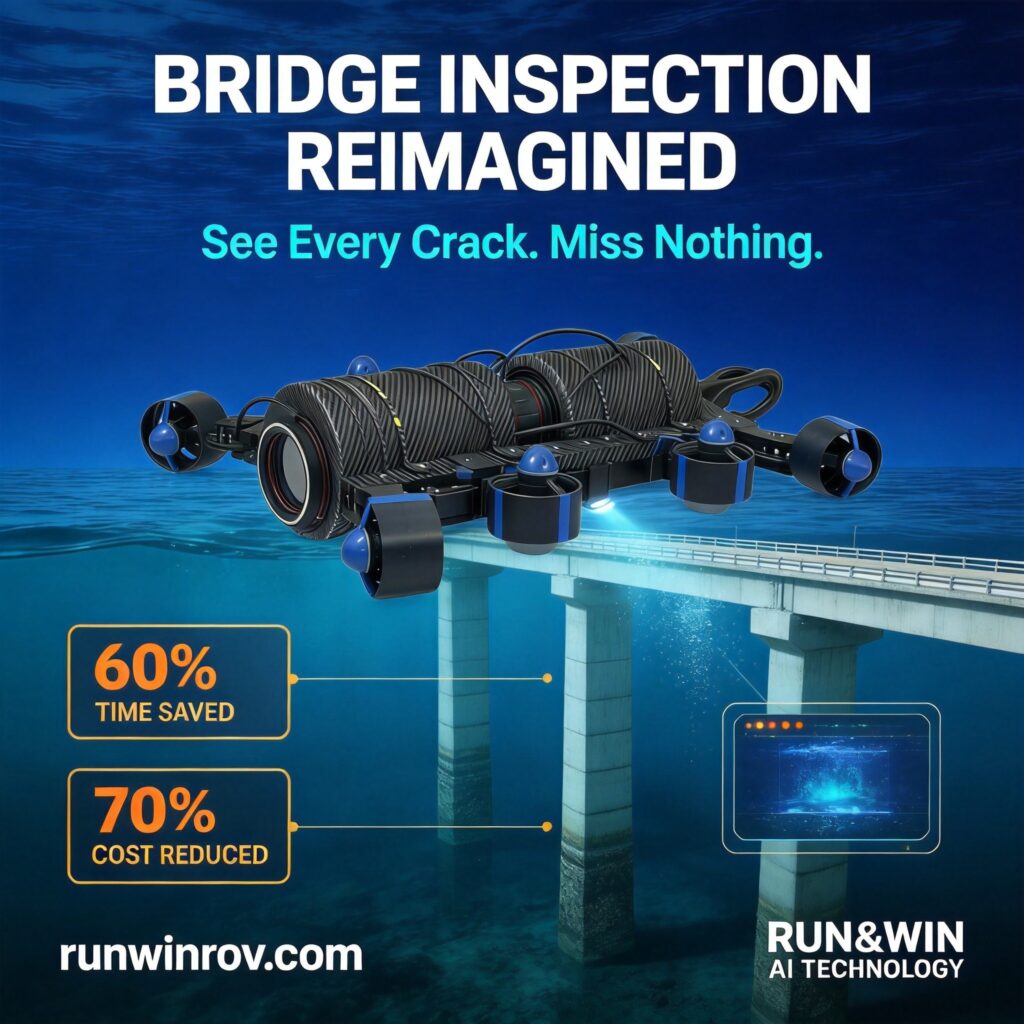
ROV inspections cost 50-70% less than comparable diver-led inspections, deliver objectively better data, and carry zero human risk. For port operators managing budgets and safety KPIs, that’s a combination that’s impossible to ignore.
3. Offshore Wind Explosion Creates New Inspection Demand
The global offshore wind industry is growing at a staggering pace, and every new turbine foundation needs regular underwater inspection.
By the numbers:
- Global offshore wind capacity is projected to exceed 120 GW by the end of 2026
- A typical offshore wind farm has 50-100 turbines, each requiring 2-4 underwater inspections per year
- That’s hundreds of thousands of new inspection hours needed annually
Why this matters beyond the wind industry:
The offshore wind boom is driving rapid innovation in ROV technology and inspection methodologies—and ports are the beneficiaries. As ROV manufacturers scale up to meet wind farm demand, costs come down and capabilities improve across all underwater inspection applications.
Ports and harbor authorities that establish inspection partnerships now will be positioned to leverage these advances as they cascade into the broader marine infrastructure market.
4. Data-Driven Maintenance Replaces Reactive Repairs
The traditional approach to underwater infrastructure management could be summed up as: inspect when required, repair when broken.
2026 is seeing a fundamental shift toward predictive, data-driven maintenance—and it’s being made possible by the consistent, objective data that AI-powered ROVs deliver.
How it works:
- Baseline inspection — ROV captures high-resolution, geotagged data of the entire structure
- Annual comparison — each year’s inspection is automatically compared to the baseline and previous years
- Trend analysis — AI identifies degradation patterns: is that corrosion spreading? How fast?
- Predictive scheduling — repairs are scheduled based on actual condition data, not arbitrary timelines
The business case:
Ports using this approach report 30-40% lower long-term maintenance costs because they address problems early, before they become expensive failures. They also eliminate the waste of over-inspecting areas that aren’t degrading, and under-inspecting high-risk zones.
This is the real value of consistent, comparable inspection data—not just checking a compliance box, but fundamentally changing how you manage infrastructure.
5. Environmental & Safety Pressures Accelerate Technology Adoption
Two powerful forces are pushing the industry toward ROV-based inspection: safety regulations and environmental awareness.
Safety first:
Underwater diving is one of the most dangerous professions in the world. Even with modern safety protocols, commercial divers face risks from decompression sickness, equipment failure, and unpredictable underwater conditions. Regulators and port authorities are increasingly asking: if there’s a way to get the same data without putting humans at risk, why wouldn’t we use it?
Environmental concerns:
ROV inspections are also significantly more environmentally friendly. They produce zero discharge, disturb marine life far less than diver operations, and don’t require support vessels burning fuel 24/7. For ports working to reduce their carbon footprint and meet sustainability targets, this is an increasingly important factor.
As both safety and environmental regulations tighten, the question won’t be “why switch to ROV?” but “why are you still using divers?”
What This Means for Your Operation
If you’re a port operator, infrastructure manager, or marine engineering professional, these five trends point to one clear conclusion: the underwater inspection industry is changing, and the organizations that adapt fastest will gain a significant competitive advantage.
Here’s what we recommend:
- Audit your current inspection process. How much do you spend annually? What data do you get? How far in advance do you need to schedule?
- Evaluate ROV-based solutions. Compare cost, data quality, safety, and turnaround time against your current approach.
- Start with a pilot. Run a single inspection with an ROV provider and compare the results side-by-side with your usual process.
- Plan for IMO SafeStream. If your port handles cargo vessels over 500 GT, the October 2026 deadline is coming fast—don’t wait until the last minute.
The future of underwater inspection isn’t more of the same. It’s faster, cheaper, safer, and data-driven. And it’s arriving faster than most people realize.
Ready to see what AI-powered ROV inspection could do for your port or infrastructure project? Contact our team for a free consultation and inspection feasibility assessment.
Run&Win builds AI-powered industrial robots for real-world applications. From underwater ROV inspection to rail maintenance automation, we deliver technology that works—not technology that talks.